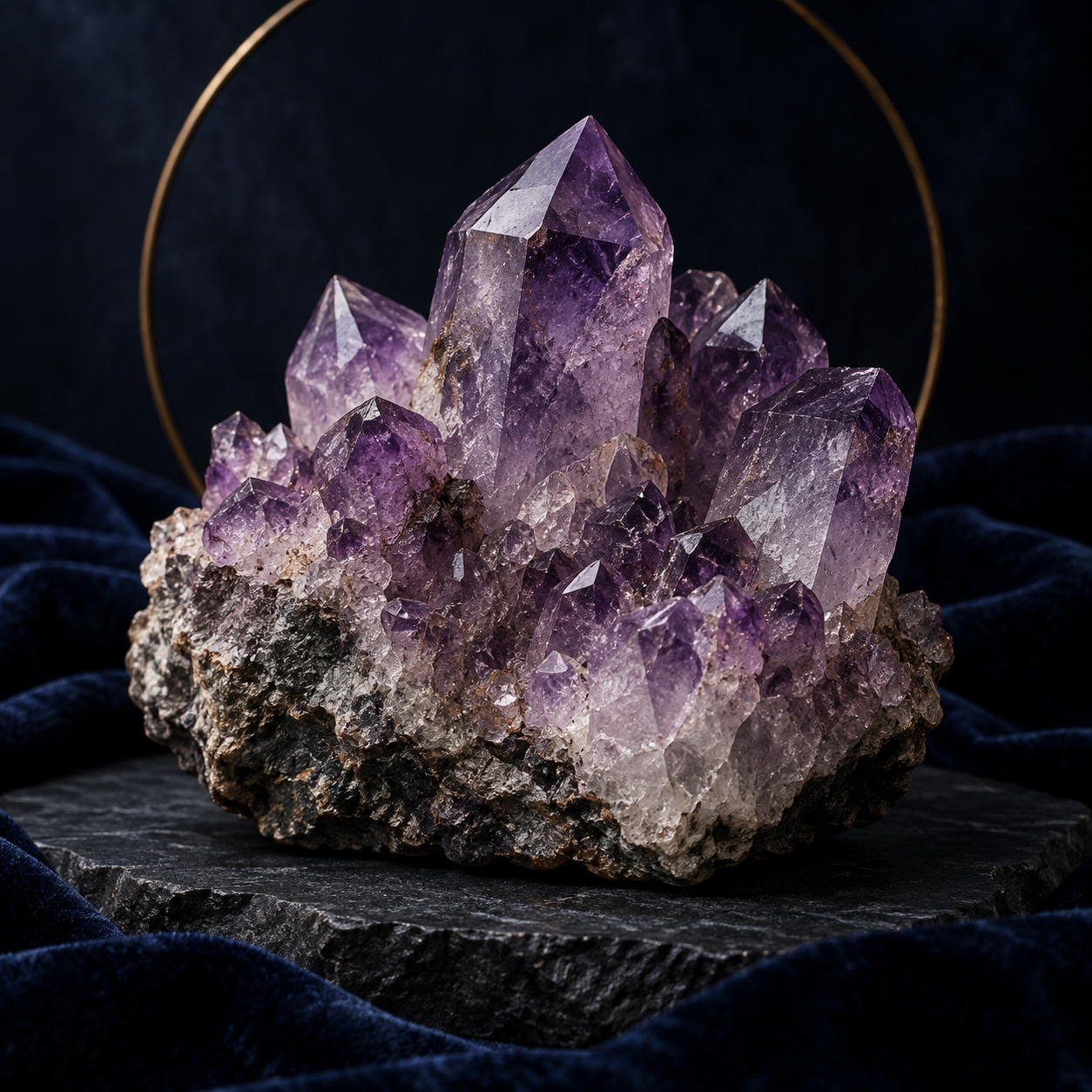
Amethyst has an immediate visual language: violet, translucent, sometimes cloudy, sometimes deep enough to look almost like evening. It has also carried symbolic meaning across centuries, making it one of the most recognisable stones in contemporary crystal collections.
At Tara, we approach amethyst as both a natural material and a ritual object. You can appreciate its geology and colour while also choosing to give it a personal meaning in your daily practice.
A little history
Amethyst is a purple variety of quartz. Its colour is connected to trace elements and irradiation within the crystal structure, and the intensity can vary significantly between specimens. The stone has also appeared in jewellery and symbolic traditions for a very long time, including historical associations with sobriety and restraint in parts of the classical world.
The modern symbolic language
In contemporary crystal practice, amethyst is often associated with calm, contemplation, spiritual practice and quiet reflection. Those associations belong to the world of symbolism and personal ritual rather than established medical treatment. A stone can be meaningful without needing to be presented as a cure.
Caring for amethyst
Keep amethyst away from prolonged harsh sunlight if you want to preserve its colour, and avoid sudden temperature changes. For everyday cleaning, a soft cloth and gentle handling are usually enough for jewellery. If your piece contains elastic, metal or other materials, care for the whole bracelet or pendant according to its most delicate component.
Making it personal
Try placing your amethyst near a journal at the end of the day. Before writing, hold it for a few breaths and ask: What do I need to stop carrying tonight? The answer does not need to be profound. Sometimes a ritual works because it gives an ordinary thought a quiet place to land.
May your evenings have enough stillness to hear what the busy hours could not say.