
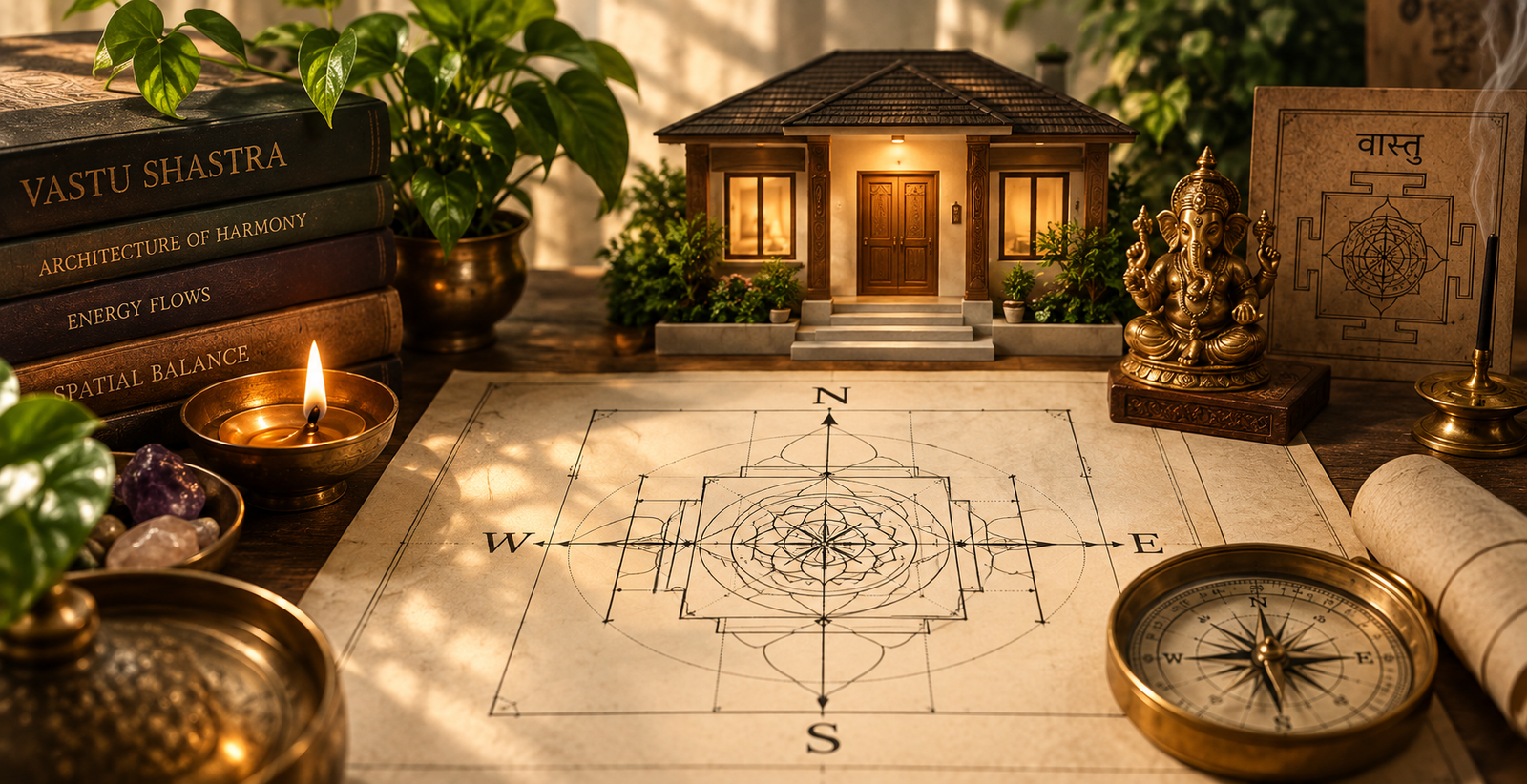
A home can look beautiful and still feel awkward. A chair blocks a walkway, the work table sits where the afternoon glare makes it impossible to concentrate, or the room everyone gathers in is somehow always cluttered.
Vastu Shastra is a traditional Indian approach to spatial arrangement and orientation. People use it in different ways and with different levels of faith. A useful modern starting point is to notice the space carefully before reaching for remedies.
Begin with movement
Where do people naturally walk? Which doors are constantly blocked? Which areas collect bags, laundry, paperwork or unused objects? A space often tells you what it needs through repeated behaviour.
Notice light and function
Traditional spatial principles can be discussed alongside practical questions about daylight, ventilation, privacy, noise and use. These are not opposites. A thoughtful home should support the people who actually live in it.
Do not turn every imperfection into a problem
Online Vastu content can make ordinary homes sound frightening. A calmer approach asks which changes are proportionate and realistic. Not every room needs a major correction, and no spiritual system should be used to create unnecessary fear about your home.
Make the ritual personal
If you enjoy Vastu as a spiritual practice, a simple weekly reset can become meaningful: open the windows, clear one surface, light a lamp safely if that is part of your tradition, and spend a few minutes noticing how the room feels.
May your home become not a place you fear getting “wrong”, but a place that helps you return to yourself.